bbcBread Baker's Calculator V2

Professional calculations for home bakers with no kneading and pre-ferments

Version: 3.0.0
Enter ≥100g
0-100% only
50-100% only
0.1-2% only
1-3% only
0-5% only

Pre-ferment Options

0-50% only
0-500% only
0-5% only

No Pre-ferment Selected

Select a pre-ferment type to see details and recommendations.

Flour Type Notes

Whole Wheat: Adds fiber and nuttiness. Best kept under 30% for lighter texture. Increase hydration by 2-5% compared to white flour.

Dough Composition

Measurement Notes
  • All cup/spoon conversions use US standard measures
  • Water: preferably filtered or tap with low chorination
  • When using liquid sweeteners (honey, syrup):
    • Reduce water by an equal amount
    • e.g., 20g honey → use 20g less water
  • For accuracy, weight measurements (grams) are highly recommended
  • For mixing bowls, choose one 2-3x larger than your dough volume to allow for rising
  • Volume estimates are approximate and can vary based on:
    • Fermentation time and temperature
    • Shaping technique
    • Baking method (Dutch oven vs baking stone)
  • The estimates assume standard no-knead methods with:
    • Long fermentation (12-18 hours)
    • Proper shaping
    • Steam during the first part of baking
  • Choosing Container and Baking Sizes:
    • Choose a proofing vessel 2-3x larger than the dough's estimated volume before proofing
    • Choose a baking vessel 2.5–4x larger than the dough's estimated volume before baking
Pre-ferment Flour 0.0 g
≈ 0 cups
Pre-ferment Water 0.0 g
≈ 0 cups
Pre-ferment Yeast 0.0 g
≈ 0 tsp
White Bread Flour 400.0 g
≈ 3¼ cups
Whole Wheat (Wholemeal) Flour 100.0 g
≈ ¾ cup
Water (at Room Temp) 375.0 g
≈ 1½ cups
Instant Yeast 2.5 g
≈ ¾ tsp
Fine Sea Salt 10.0 g
≈ 2 tsp
Sugar or Honey 0.0 g
Total Dough Weight
(excluding sweetener)
887.5 g
Estimated Dough Volume (proofed) 0.0 L
≈ 0.0 qt
Estimated Bread Volume (baked) 0.0 L
≈ 0.0 qt

Estimated Yield

Slices (30g each)
30
Servings (2 slices)
15
Loaf tin
Medium (900g)
Typical tin dimensions
23 x 13 x 7.5 cm / 9" x 5" x 3"
Dutch oven
24 cm / 9.5 in
Mixing bowl
Medium (3-4L / 3-4 qt)
Banneton
20-22 cm / 8-9 in (Round or Oval)
Banneton capacity
~1 L

Your Notes

Bread Type Reference - No Kneading

General Advice:
Room Temperature Variations:
  • Cold (16-18°C/60-65°F): Extend rest time by 2-4 hours.
  • Warm (24-27°C/75-80°F): Reduce rest time by 1-2 hours.
  • Watch for dough doubling in size rather than strict timing.
Refrigeration (Retarding):
  • Standard method: After initial mix, refrigerate (4°C/39°F) for 12-72 hours for deeper flavor.
  • Not recommended for:
    • Quick breads with baking powder/soda
    • Enriched doughs (high butter/egg content)
    • 100% rye breads (use cool room instead)
  • Let refrigerated dough warm at room temp for 1-2 hours before shaping.

Bread Enhancements & Flavor Variations

Enhancement Guidelines:
  • Start small - test with 50% of recommended amounts first
  • Liquid adjustments - reduce water when adding liquid ingredients
  • Flour adjustments - may need slightly more flour with wet additions
  • Fermentation - sugar speeds up, salt slows down yeast activity
Sweeteners
Sugar (white/granulated): 1-3% | Better browning, softer crust, faster fermentation
Honey: 2-5% | Moist crumb, golden crust, subtle flavor. Reduce water by weight of honey
Maple Syrup: 3-6% | Distinct flavor, dark crust. Reduce water by syrup weight
Molasses: 2-4% | Rich color, robust flavor. Pairs well with rye and whole grains
• Sugar amounts above 5% may inhibit yeast activity
• Liquid sweeteners add to overall hydration - adjust accordingly
• For enriched doughs, increase yeast by 0.1-0.2%
Dairy & Fats
Milk (replace water): 25-100% | Softer crust, richer flavor, longer shelf life
Butter: 3-10% | Tender crumb, rich flavor. Best for sandwich loaves and brioche
Oil (olive/vegetable): 2-8% | Moist crumb, softer texture. Excellent for focaccia
Eggs: 5-15% (of flour weight) | Rich yellow color, tender texture. Reduce water
• Scalded and cooled milk prevents enzyme interference
• High-fat doughs may need longer fermentation
• Butter should be softened but not melted for best incorporation
Crust Enhancers
Steam: Essential | First 10-15 minutes of baking for crisp, shiny crust
Diastatic Malt Powder: 0.5-1% | Better browning, improved fermentation, crisp crust
Vital Wheat Gluten: 1-2% | Better oven spring, taller loaves, crispier crust
Rice Flour: Dusting | Prevents sticking, creates distinctive pattern and texture
• Spray water in oven or use Dutch oven for steam
• Egg wash (1 egg + 1 tbsp water) for shiny, dark crust
• Cornstarch wash for extra crispness on baguettes
Flavor Additions
Seeds (sunflower, pumpkin, flax): 5-15% | Toast first for best flavor. Soak chia/flax seeds
Nuts (walnuts, pecans, almonds): 10-20% | Toast and chop coarse. Reduce hydration slightly
Dried Fruits: 10-25% | Soak in warm water or liquor first to prevent burning
Herbs & Spices: 1-3% | Rosemary, thyme, cinnamon. Fresh herbs may need water adjustment
Cheese (hard): 10-20% | Parmesan, cheddar. Grate finely and reduce salt slightly
• Add inclusions during final mix to avoid overworking dough
• Soaked fruits/nuts may require slightly less water in recipe
• Strong flavors like garlic powder use sparingly (0.5-1%)
Pre-ferments & Sourdough
Poolish (liquid preferment): 20-40% of flour | Light, open crumb, complex flavor
Biga (stiff preferment): 20-50% of flour | Chewy texture, robust flavor
Sourdough Starter: 15-30% of flour | Tangy flavor, extended shelf life, natural leavening
• Reduce commercial yeast when using pre-ferments
• Adjust fermentation times - sourdough needs longer proofing
• Pre-ferments develop gluten structure and flavor complexity
Mixer Integration with Pre-ferments
  • When to Use a Mixer:
    • Enriched doughs (high butter, eggs, sugar content)
    • Doughs with high percentage of pre-ferment
    • When developing strong gluten structure quickly
    • Commercial production or large batches
    • Doughs with low hydration that are difficult to mix by hand
  • Basic Mixer Method with Pre-ferments:
    • Step 1: Add pre-ferment to mixing bowl
    • Step 2: Add remaining water (room temperature)
    • Step 3: Add remaining flour and yeast
    • Step 4: Mix on low speed for 2-3 minutes until combined
    • Step 5: Rest for 20-30 minutes
    • Step 6: Add salt and mix on medium speed for 4-6 minutes
    • Step 7: Check gluten development with windowpane test
    • Step 8: Add any inclusions (nuts, seeds, dried fruit) at the end
  • Mixer Speed Guidelines:
    • Low Speed (1-2): Initial mixing and incorporation (2-3 minutes)
    • Medium Speed (3-4): Gluten development (4-8 minutes)
    • High Speed (5+): Generally avoid for most bread doughs
    • Total Mixing Time: Typically 6-12 minutes depending on flour and hydration
  • Temperature Control:
    • Monitor dough temperature (ideal: 24-26°C/75-78°F)
    • Use cooler water in warm environments
    • Mixer friction increases temperature by 1-2°C/2-4°F per minute of mixing
    • For enriched doughs, keep ingredients at room temperature
  • Special Considerations for Different Pre-ferments:
    • Poolish (Liquid): Mixes in easily, distribute evenly at beginning
    • Biga (Firm): Break into small pieces before adding to ensure even distribution
    • Sponge (Yeast-rich): Very active, mix gently to preserve gas bubbles
    • Tangzhong (Gel): Add at beginning with other wet ingredients
    • Sourdough Starter: Add after initial flour-water mix, before salt
  • Windowpane Test for Gluten Development:
    • Take a small piece of dough and stretch gently between your fingers
    • Properly developed dough will stretch thin enough to see light through it
    • Should form a thin, translucent membrane without tearing immediately
    • If it tears easily, continue mixing for 1-2 more minutes
  • Common Mixer Mistakes to Avoid:
    • Overmixing (dough becomes warm and sticky)
    • Adding salt too early (inhibits yeast and gluten development)
    • Not scraping down sides of bowl during mixing
    • Using wrong speed settings for dough type
    • Ignoring dough temperature rise during mixing
  • Hand Mixing vs. Machine Mixing Comparison:
    Aspect Hand Mixing Machine Mixing
    Time Required 15-25 minutes active 8-12 minutes
    Gluten Development Gentle, gradual Fast, intensive
    Temperature Control Easier to manage Can heat up quickly
    Dough Feel Intuitive understanding Less tactile feedback
    Best For High hydration, no-knead Enriched, low hydration doughs
  • Hydration Adjustments for Mixer Use:
    • Mixer-kneaded doughs often require 2-5% less water than hand-kneaded
    • The mechanical action develops gluten more efficiently
    • Start with lower hydration and add water gradually if needed
    • High-speed mixing can make dough feel wetter than it actually is
  • Post-Mixing Steps:
    • Transfer dough to lightly oiled bowl for bulk fermentation
    • Perform one set of stretch and folds after 30 minutes to align gluten
    • Continue with standard fermentation schedule
    • Consider shorter bulk fermentation with mixer-developed dough
Autolyse Technique:
  • What is Autolyse: Resting flour and water together before adding yeast and salt.
  • Benefits:
    • Improved gluten development
    • Better hydration absorption
    • Enhanced flavor development
    • Easier dough handling
  • Basic Method:
    • Mix flour and water only until combined
    • Cover and rest for 20-60 minutes
    • Add yeast, salt, and remaining ingredients
    • Proceed with normal mixing/fermentation
  • Timing Guidelines:
    • Standard bread flour: 30-45 minutes
    • Whole grain flours: 45-60 minutes (absorbs slower)
    • High hydration doughs (≥75%): 20-30 minutes
    • Rye or spelt: 15-20 minutes (weaker gluten)
  • When to Use Autolyse:
    • All no-knead and artisan breads
    • High hydration doughs (≥75%)
    • Doughs with whole grain or alternative flours
    • When improving dough strength and extensibility
  • When to Skip Autolyse:
    • Enriched doughs (butter, eggs, milk)
    • Quick breads with chemical leaveners
    • Doughs with pre-ferments (already developed)
    • When short on time
  • Special Cases:
    • With pre-ferments: Add pre-ferment during autolyse for better integration
    • High percentage rye: Limit to 15-20 minutes to prevent gumminess
    • In hot weather: Reduce time to 15-20 minutes to prevent over-fermentation
Stretch and Fold Technique:
  • What are Stretch and Folds: A gentle technique to develop gluten structure without traditional kneading, perfect for high-hydration doughs.
  • Benefits:
    • Builds gluten strength gradually
    • Improves dough structure and gas retention
    • Distributes yeast and temperature evenly
    • Enhances oven spring and crumb structure
    • Perfect for no-knead and high-hydration doughs
  • Basic Method:
    • Wet hands slightly to prevent sticking
    • Grab one side of dough, stretch upward gently
    • Fold stretched portion over center of dough
    • Rotate bowl 90° and repeat 3-4 more times
    • Cover and rest between sets
  • Timing Guidelines:
    • Standard Schedule: 3-4 sets at 30-minute intervals during first 1.5-2 hours of bulk fermentation
    • High Hydration Doughs (≥75%): 4-5 sets at 20-30 minute intervals
    • Whole Grain Doughs: 2-3 sets at 45-minute intervals (slower gluten development)
    • Enriched Doughs (butter/eggs): 4-6 sets at 20-minute intervals
  • When to Stop:
    • Dough feels smooth and cohesive
    • Resists stretching and springs back slightly
    • Surface becomes taut and less sticky
    • Dough holds its shape better when folded
  • Special Cases:
    • With Pre-ferments: Begin stretch and folds 30 minutes after mixing in pre-ferment
    • Cold Fermentation: Complete all stretch and folds before refrigeration
    • Very High Hydration (≥85%): Use coil folds instead of traditional stretch and folds
    • Rye Doughs: Limit to 1-2 gentle sets (rye gluten is fragile)
  • Common Mistakes to Avoid:
    • Stretching too aggressively (can tear gluten)
    • Performing folds too late in fermentation
    • Not wetting hands (dough sticks excessively)
    • Continuing folds after dough has significantly risen
Sample Timetable with Overnight Poolish and Dough Refrigeration
  • This schedule creates maximum flavor development with convenient timing for home bakers
  • DAY 1 - EVENING (Approx 8:00 PM)
  • Create Poolish Pre-ferment:
    • Mix 100g bread flour + 100g water + 0.1g instant yeast
    • Stir until smooth, cover with plastic wrap
    • Leave at room temperature (20-22°C/68-72°F)
    • Expected fermentation: 12-14 hours overnight
  • DAY 2 - MORNING (Approx 8:00 AM)
  • Poolish Readiness Check:
    • Domed surface with many bubbles
    • Pleasant slightly alcoholic aroma
    • May have started to collapse in center
    • 2.5-3x volume increase from original
  • Mix Final Dough (Approx 8:15 AM):
    • Add remaining flour, water, salt to poolish
    • Mix until no dry flour remains (shaggy mass)
    • Cover and rest 30 minutes
  • Bulk Fermentation - Room Temperature Phase (Approx 8:45 AM - 11:45 AM)
  • First Set of Stretch and Folds (8:45 AM):
    • Perform 4 stretches and folds (N, S, E, W)
    • Dough will be very slack and sticky
    • Cover and rest 30 minutes
  • Second Set of Stretch and Folds (9:15 AM):
    • Dough should feel slightly stronger
    • Repeat 4 stretches and folds
    • Cover and rest 30 minutes
  • Third Set of Stretch and Folds (9:45 AM):
    • Dough should be smooth and cohesive
    • Final set of stretches and folds
    • Cover and continue bulk fermentation
  • Continue Bulk Fermentation (9:45 AM - 11:45 AM):
    • Let dough rise undisturbed
    • Should increase 30-50% in volume
    • Look for small bubbles on surface
  • Refrigeration Phase - Cold Fermentation (Approx 11:45 AM - Next Morning)
  • Prepare for Cold Proof:
    • Lightly flour work surface
    • Gently turn dough out (avoid degassing)
    • Preshape into loose round
    • Rest 20-30 minutes (bench rest)
  • Final Shaping (Approx 12:15 PM):
    • Shape into final boule or batard
    • Place in floured banneton, seam side up
    • Cover with plastic bag or shower cap
  • Refrigerate (Approx 12:30 PM):
    • Place in refrigerator at 4°C/39°F
    • Cold proof for 12-24 hours
    • Flexible timing - bake anytime next 36 hours
  • DAY 3 - BAKING DAY (Flexible Timing)
  • Pre-baking Preparation (2-3 Hours Before Baking):
    • Remove dough from refrigerator
    • Let warm at room temperature 1-2 hours
    • Dough should rise 20-30% more
    • Preheat oven with Dutch oven 1 hour at 250°C/480°F
  • Baking (Example: 10:00 AM):
    • Turn dough onto parchment paper
    • Score top with sharp blade or lame
    • Bake covered in Dutch oven: 20 minutes at 250°C/480°F
    • Bake uncovered: 20-25 minutes at 230°C/445°F
    • Internal temperature should reach 96-99°C/205-210°F
  • Cooling (Essential!):
    • Cool completely on wire rack (2-3 hours)
    • Wait until completely cool before slicing
    • This completes starch gelatinization
  • Timing Flexibility & Adjustments:
  • For Warmer Kitchens (24-27°C/75-80°F):
    • Reduce room temperature phase by 1 hour
    • Poolish may be ready in 10-12 hours
    • Consider shorter cold proof (8-12 hours)
  • For Colder Kitchens (16-18°C/60-65°F):
    • Extend room temperature phase by 1-2 hours
    • Poolish may need 14-16 hours
    • Longer cold proof (18-36 hours) enhances flavor
  • Weekend Baker Variation:
    • Friday PM: Create poolish
    • Saturday AM: Mix dough, bulk ferment
    • Saturday PM: Shape and refrigerate
    • Sunday AM: Bake fresh bread
Baking Time & Temperature Guidelines
Temperature Effects on No-Knead Bread
  • Higher Temperature (245–260°C/475–500°F):
    • Shorter bake: ~20–25 minutes covered, ~10–15 minutes uncovered
    • Result: Thick, blistered crust; moist interior
  • Lower Temperature (220–230°C/425–450°F):
    • Longer bake: ~35–40 minutes covered, ~20 minutes uncovered
    • Result: Even browning, softer crust, denser crumb
  • Adjustments for:
    • Loaf size: Halve the dough? Reduce time by 10–15 minutes
    • Preference: Darker crust? Extend uncovered bake by 5 minutes
    • Oven quirks: Use an oven thermometer to verify actual temperature
Covered vs. Uncovered Baking in a Dutch Oven
  • Covered Baking (First Phase):
    • Traps Steam: Creates humid environment, delaying crust formation for maximum oven spring
    • Promotes Rise: Moist heat keeps dough elastic longer, yielding taller, airier crumb
    • Even Baking: Dutch oven distributes heat consistently like a mini-oven
    • Typical Time: 20–30 minutes (longer for thicker crusts)
  • Uncovered Baking (Second Phase):
    • Crisps the Crust: Releases steam, allowing crust to dry, harden, and develop color
    • Enhances Flavor: Maillard reaction and caramelization deepen crust taste and color
    • Sets the Crumb: Ensures interior bakes through without becoming gummy
    • Typical Time: 15–30 minutes (longer for darker, crispier crusts)
  • Adjusting Times for Preferences:
    • Softer Crust: Extend covered time (30+ minutes), shorten uncovered
    • Crispier/Darker Crust: Reduce covered time (20 minutes), extend uncovered (up to 30 minutes)
    • Open Crumb: Ensure full covered rise (25+ minutes) before uncovering
Pro Tip: Experiment with ratios to match your ideal texture. A digital thermometer helps—aim for 96–99°C/205–210°F internal temperature for doneness.
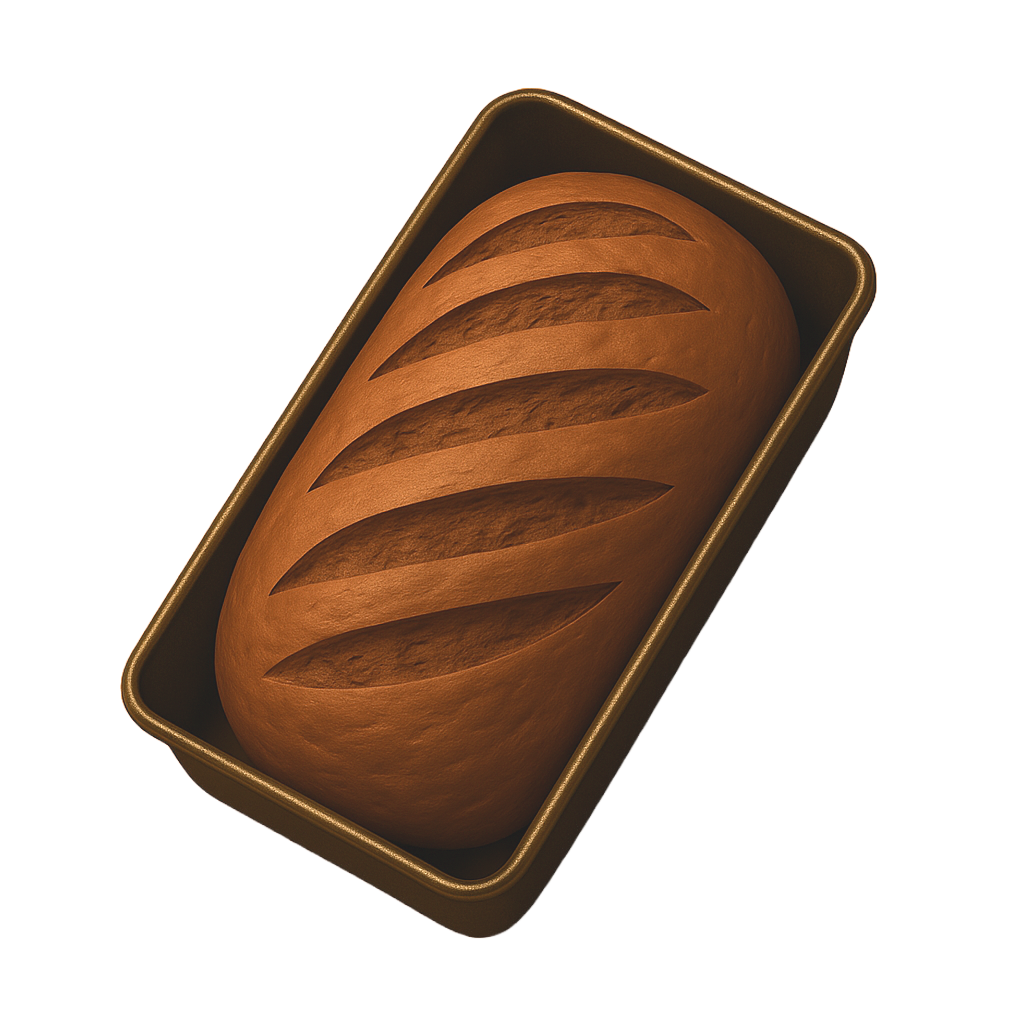
Sandwich Loaf
Sandwich Loaf
Baker's %: Flour 100 | Water 62-65 | Yeast 1-1.5 | Salt 1.8-2.2
Rest: 8-12h | Proof: 1-2h | Bake: 180-190°C/355-375°F 30-40m | Temp: 88-93°C/190-200°F
Equipment: Standard loaf pan or Pullman pan
  • For softer crust, brush with butter after baking
  • Add 1-2% sugar for better browning
  • Use milk instead of water for richer flavor
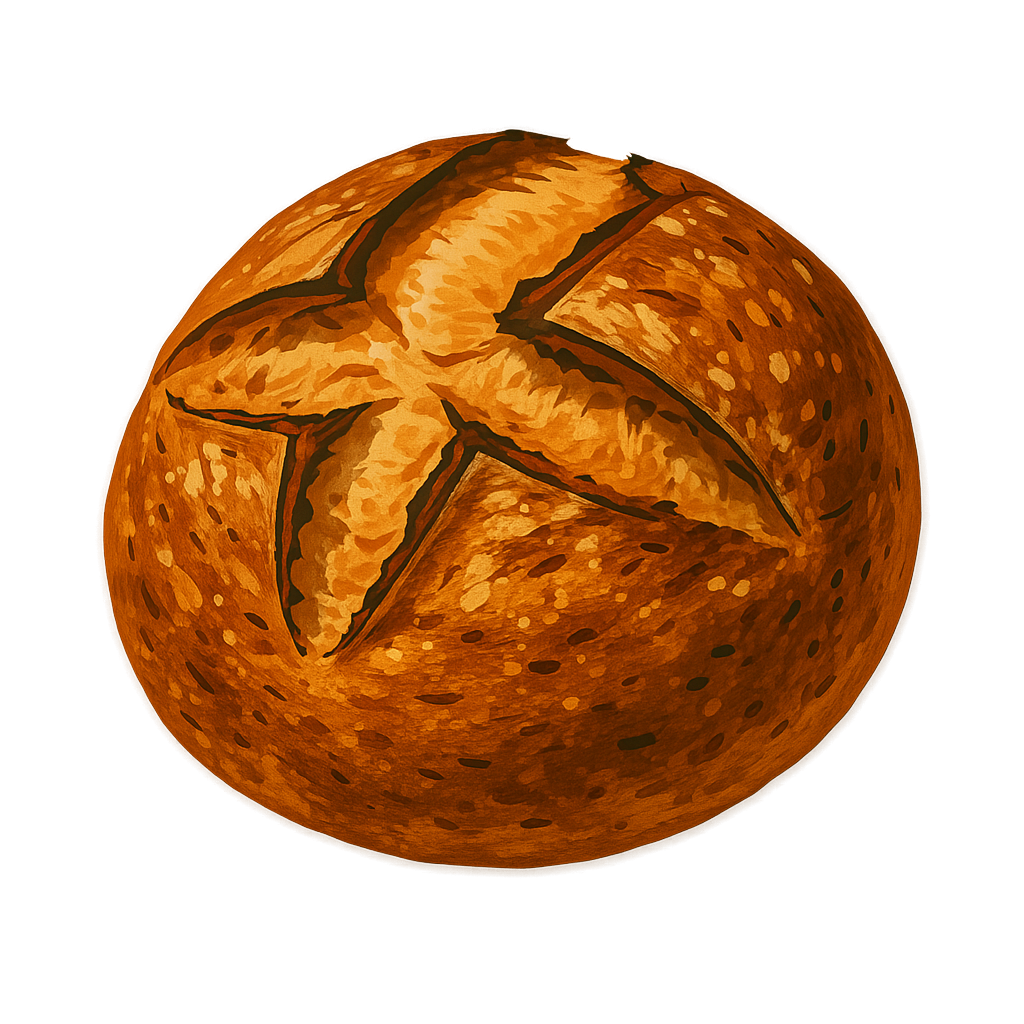
Crusty Round (Boule)
Baker's %: Flour 100 | Water 70-74 | Yeast 0.5-1 | Salt 2-2.2
Rest: 10-14h | Proof: 1-2h | Bake: 240°C/465°F 40-45m | Temp: 96-99°C/205-210°F
Equipment: Dutch oven or baking stone with steam
  • Score top deeply (1-2cm) for better oven spring
  • Add 1% diastatic (active enzymes) malt for improved crust color
  • For sweeter version, add 3-5% honey
Country Loaf
Country Loaf
Baker's %: Flour 100 | Water 74-78 | Yeast 0.4-0.8 | Salt 2.1-2.3
Rest: 10-14h | Proof: 1-2h | Bake: 230°C/445°F 40-45m | Temp: 96-99°C/205-210°F
Equipment: Dutch oven or Banneton basket and baking stone
  • Cold retard for 12-24h for deeper flavor
  • Add 1-2% whole wheat flour for rustic character
  • For sweeter version, use 2-3% barley malt syrup
Baguette
Baguette
Baker's %: Flour 100 | Water 72-75 | Yeast 0.6-1.2 | Salt 2.2-2.5
Rest: 8-12h | Proof: 1-1.5h | Bake: 250°C/480°F 15-20m | Temp: 93-96°C/200-205°F
Equipment: Baguette pan or perforated baking sheet
  • Use bread flour for better structure
  • Add ice cubes to oven for steam
  • For slightly sweet version, add 1% sugar
Whole Wheat (Wholemeal)
Baker's %: Flour 100 | Water 76-80 | Yeast 0.6-1 | Salt 2.2-2.5
Rest: 10-14h | Proof: 1-2h | Bake: 220°C/430°F 35-45m | Temp: 96-99°C/205-210°F
Equipment: Loaf pan or Dutch oven
  • Soak whole wheat flour in water for 1h before mixing (autolyse)
  • Add 1-2% vital wheat gluten for better rise
  • For softer crust, brush with milk before baking
Rye Bread
Rye Bread
Baker's %: Flour 100 | Water 78-85 | Yeast 0.8-1.5 | Salt 2.2-2.5
Rest: 12-18h | Proof: 1.5-2.5h | Bake: 200°C/390°F 45-60m | Temp: 96-99°C/205-210°F
Equipment: Loaf pan or baking sheet
  • Add 1-2% caraway seeds for traditional flavor
  • Use bread flour with rye for better structure
  • For darker color, add 1-2% cocoa powder
Sourdough
Sourdough
Baker's %: Flour 100 | Water 72-78 | Starter 20-30 | Salt 2-2.2
Rest: 4-6h + 12-18h cold | Proof: 2-4h | Bake: 240°C/465°F 20m + 220°C/430°F 25-30m | Temp: 96-99°C/205-210°F
Equipment: Dutch oven or baking stone with steam
  • Maintain starter at 100% hydration (equal flour and water)
  • For more sour flavor, extend cold fermentation
  • Add 1% diastatic malt for better oven spring
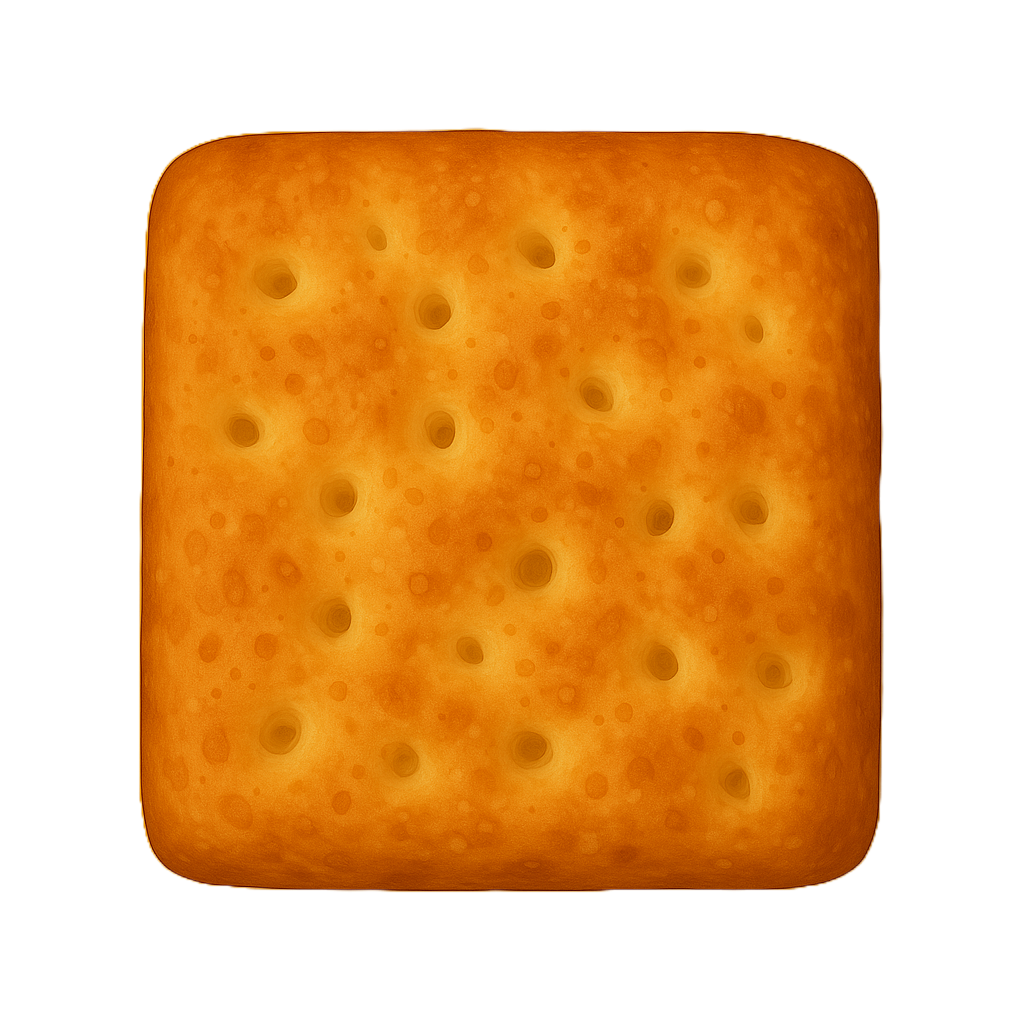
Focaccia
Focaccia
Baker's %: Flour 100 | Water 75-80 | Yeast 0.8-1.5 | Salt 2.2-2.5 | Olive Oil 5-8
Rest: 12-18h | Proof: 1-2h | Bake: 220°C/430°F 20-25m | Temp: 93-96°C/200-205°F
Equipment: Baking sheet or sheet pan
  • Use 2-3% olive oil in dough, more for pan
  • Dimple dough deeply before baking
  • Top with rosemary, coarse salt before baking
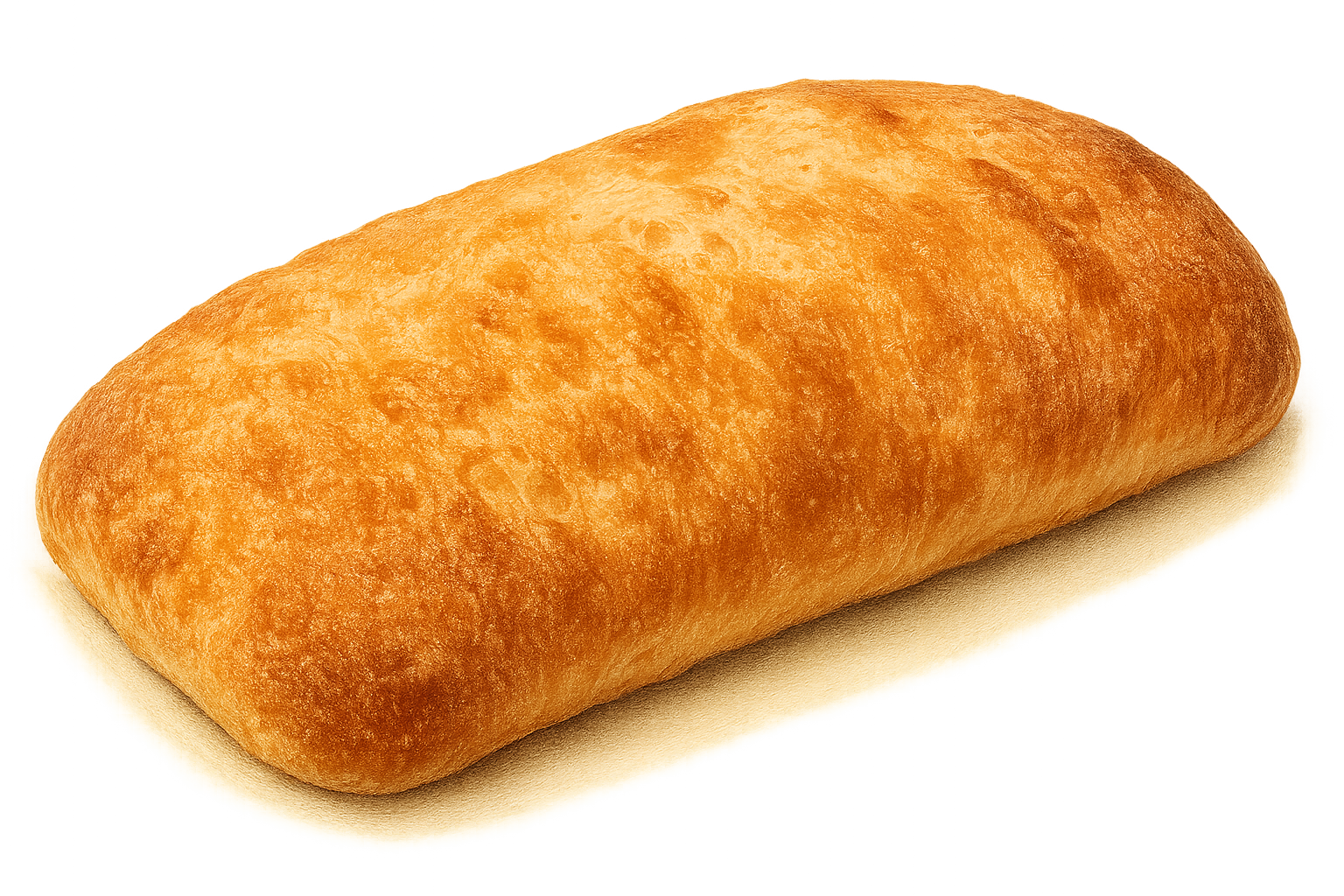
Ciabatta
Ciabatta
Baker's %: Flour 100 | Water 78-82 | Yeast 0.5-1 | Salt 2-2.2
Rest: 12-18h | Proof: 1-2h | Bake: 230°C/445°F 20-25m | Temp: 96-99°C/205-210°F
Equipment: Baking stone or perforated pan
  • Very high hydration creates large holes
  • Handle dough gently to preserve air bubbles
  • For flavor variation, add 1-2% olive oil
Pizza Dough
Pizza Dough
Baker's %: Flour 100 | Water 60-65 | Yeast 0.5-1 | Salt 1.8-2.2 | Olive Oil 2-5
Rest: 24-72h cold | Proof: 2-4h | Bake: 260-290°C/500-550°F 5-8m | Temp: 93-96°C/200-205°F
Equipment: Pizza stone or steel
  • Cold fermentation develops flavor
  • Use bread flour for chewy texture
  • For crispier crust, bake directly on stone
Brioche
Brioche
Baker's %: Flour 100 | Water 15-20 | Yeast 2-3 | Salt 2-2.2 | Butter 30-50 | Eggs 20-30 | Sugar 8-15
Rest: 8-12h cold | Proof: 1.5-2.5h | Bake: 180°C/355°F 25-35m | Temp: 88-93°C/190-200°F
Equipment: Loaf pan or brioche mold
  • Keep butter and eggs at room temperature
  • Add butter gradually during mixing
  • For shiny crust, brush with egg wash before baking

Recommended Bread Baking Equipment

As an Amazon Associate, I earn from qualifying purchases. Even so, these are products we genuinely recommend for better bread baking results.

Recommended Bread Baking Books

Expand your baking knowledge with these highly-rated bread baking books.